

So, I randomly ended up in a collaboration with a very cool Hungarian influencer I've been following for a while now. After doing deep research on the water supply of Hungary, focusing on the Velencei lake, we went to the beach to prove the point and to "enjoy" the sandy beach at an almost dried out lake. The project was a lot of fun, the topic a little less, but I'm happy for the chance to co-host this informative video and push my boundaries to speak up for sustainability in a new environment.
We speak in Hungarian in the video, and we haven't (yet) prepared subtitles in English, but you are welcome to enjoy climate activism in Hungarian. 😇
A great explanation of planetary boundaries!
The European Climate Pact (a movement by the European Commission to help the EU become climate-neutral by 2050) launched this course. It's free, online, in English, and open to everyone. It's beginner-friendly and can help you dive deeper into citizen science, learn how to communicate more effectively and find new ways to inspire action in your community.
academy.europa.eu/courses/eu-climate-action-academy/
I just read this article and thought to share it here: What to do when you're feeling hopeless: Expert advice
It's about feeling hopeless when it comes to climate change and things you can do about it. The article is written with a strong USA focus, where the current sociopolitical environment is quite dire, but I think the advice included is valuable universally.
What do you think?

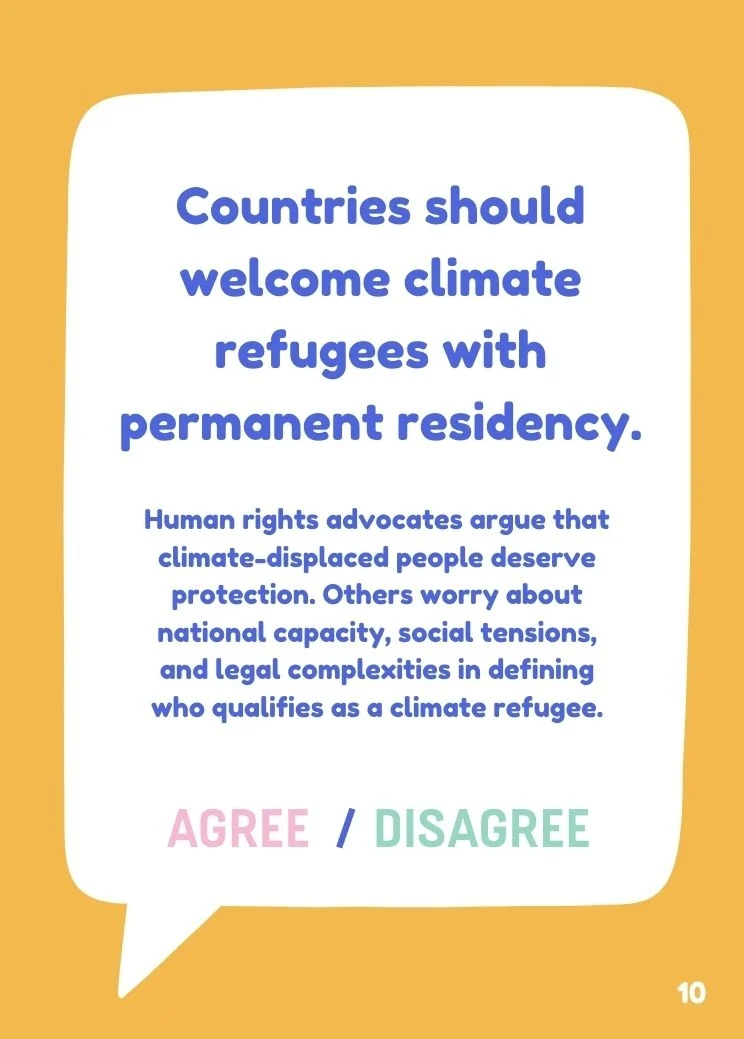
Back when I was creating debate topics for the climate game "Elephant in the Room", I based them on climate challenges we might face soon. One topic was about countries offering permanent residency to climate refugees - seemed like something on the horizon.
Turns out it's already happening. More than a third of Tuvalu's population has applied for Australia's new "climate visa" because their islands are literally sinking into the ocean. https://www.youtube.com/watch?v=wrsId0yyOMc
The Tuvalu situation raises profound questions:
- How do we preserve cultural identity when homelands become uninhabitable?
- What responsibilities do higher-emission countries have toward climate-displaced populations?
- How do we balance humanitarian values with practical concerns about integration and resources?
More countries will face these decisions as climate impacts accelerate.
These are complex issues without easy answers, and we can't figure them out alone. We need spaces where people can actually talk through these challenges together and to collectively think about solutions.
What other climate realities do you think we should be discussing more?

For anyone wondering about the theory behind our Climate4All games, here is the resource we've been using throughout the research & game design process:
GreenComp - the European sustainability competence framework
GreenComp framework outlines 12 sustainability competences designed to support education programmes, helping learners build the knowledge, skills, and attitudes needed to think, plan, and act with empathy, responsibility, and care for both the planet and public health.
JRC Publications Repository - GreenComp The European sustainability competence framework
Find the competences explained in detail in Appendix 2.
This manual has kept our games stay focused on the goal - educating through replayable & enjoyable games!