Register Your Next Workshop

Are you a certified Climate for All facilitator?

  • Not yet? What are you waiting for?
  • Yes? Then register your next workshop through this form, and it will appear on our public database of Climate for All workshops around the globe!

My Climate for All Workshops

Below are the details of your registered Climate for All workshops. Please refresh the page if your newly registered workshop hasn't appeared yet.
Inclusive Game Design

Inclusive Game Design

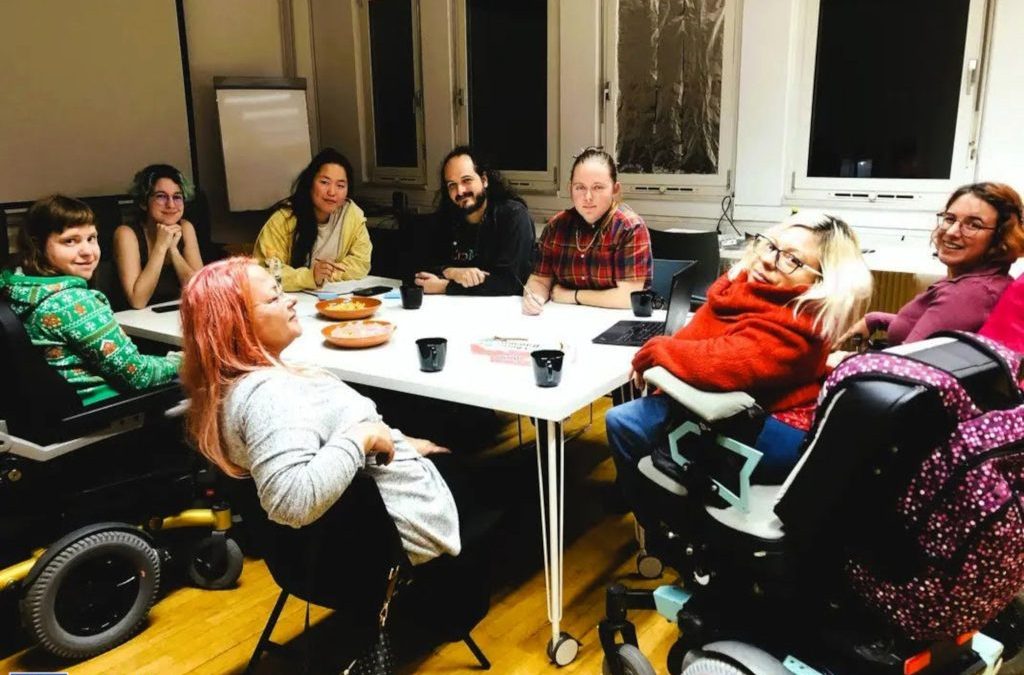
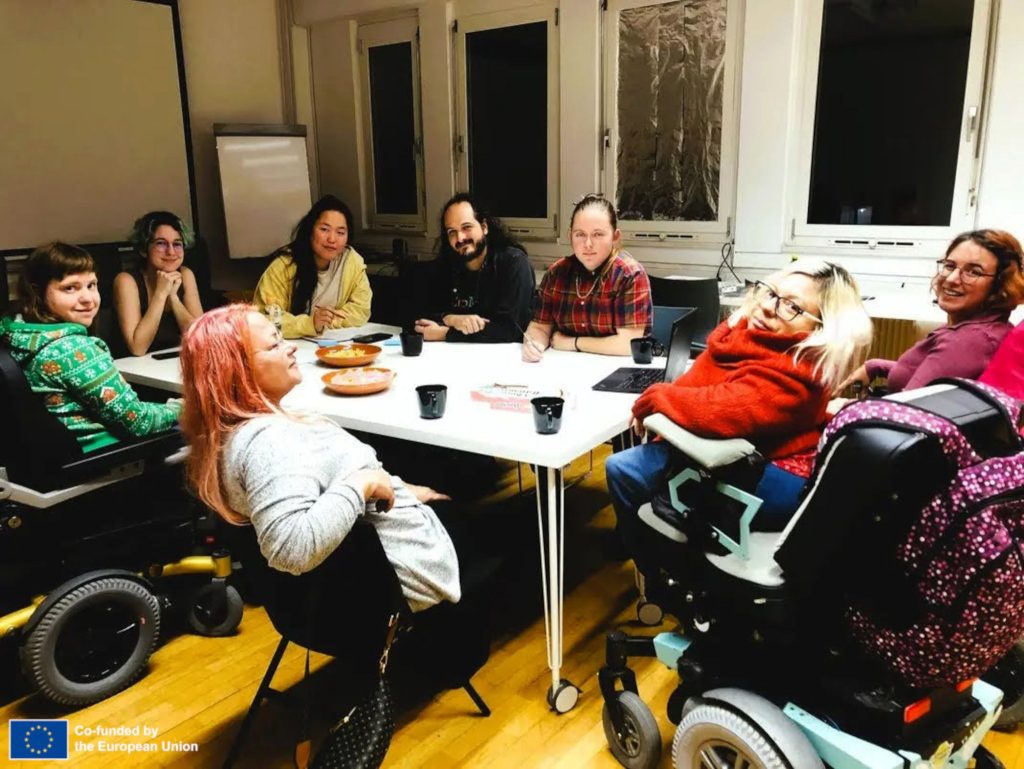
Inclusive Game Design Guide: Creating Accessible and Empowering Games for All

This guide draws upon direct insights from disability-led consultations (notably from Zavod Odtiz), best practice toolkits from recent EU-funded initiatives, and thought leadership from organisations like the Geena Davis Institute and the IGDA. It is meant to support game designers, educators, and facilitators in making games that are not only inclusive in representation but also accessible in practice.


1. Why Inclusive Game Design Matters

Inclusive games ensure that everyone, regardless of ability, background, or identity, can fully participate and feel represented. Inclusion enhances both the learning potential and emotional impact of games, making them transformative tools for education, empathy, and empowerment.


2. Inclusive Design Principles


Representation

  • Include diverse characters across age, gender, ethnicity, disability, body types, and LGBTQIA+ identities.
  • Avoid stereotypes by building multidimensional roles with agency and depth.
  • Ensure stories resonate across cultures; consult with cultural and community representatives when needed.

Accessibility

  • Design for varied physical, sensory, and cognitive needs.
  • Include large, high-contrast visuals, symbols alongside colour, and dyslexia-friendly fonts.
  • Provide written and visual rules, use plain language, and offer audio formats where possible.
  • Design components to be easy to pick up, with clear tactile feedback (rounded vs sharp corners, card holders, thicker tokens, etc.).

Fairness

  • Offer modular or scalable difficulty.
  • Allow various ways to win or progress.
  • Avoid relying on fast reflexes, fine motor skills, or one exclusive playstyle.

Team Diversity

  • Involve people with lived experience in design and testing.
  • Build diverse creative teams to reduce bias and increase innovation.


3. Designing with Disability in Mind


Card & Board Games

  • Provide cardholders and non-glare coatings.
  • Use thicker, larger cards; include braille or tactile overlays where possible.
  • Avoid shiny finishes and use fonts at least 16pt in size.
  • Ensure contrast on boards and pieces; larger dice with tactile features improve usability.
  • Decentralise gameplay areas (personal boards) to avoid reach-based limitations.
  • Allow team-based play to include assistants if needed.

City Exploration or LARP Games

  • Ensure all routes and locations are wheelchair-accessible and check for accessible toilets.
  • Avoid time pressure as a competitive element.
  • Design interactions to be at various heights, avoiding floor-placed cues.
  • Use weather-proof, wearable item carriers (not boxes).
  • Integrate QR codes and GPS as adaptable interaction formats.
  • Include buddy systems and group tasks to balance cognitive or navigational challenges.

Digital and Hybrid Games

  • Allow font size and contrast adjustment.
  • Include keyboard-only or screen-reader compatibility.
  • Avoid purely colour-based mechanics.
  • Use subtitles and audio descriptions.


4. Testing for Inclusion

  • Invite diverse playtesters: people with disabilities, different cultural backgrounds, ages, and gaming experience.
  • Use structured debriefs (4Fs: Facts, Feelings, Findings, Future) to reflect on accessibility and inclusion.
  • Document insights and revise accordingly.


5. Beyond Design: Building Inclusive Communities

  • Include accessibility and inclusion information in all materials and on your website.
  • Provide support for facilitators with toolkits and training.
  • Establish clear codes of conduct and safe play environments.
  • Celebrate inclusive success stories publicly.


6. Tools and Resources

These guidelines were developed thanks to insights from Zavod Odtiz (Slovenia, 2023), combined with the following resources:


Conclusion

Inclusion in game design is not an add-on; it is a mindset that shapes the entire process from concept to playtesting. The more accessible, diverse, and inclusive a game is, the more powerful its impact becomes. Let’s build games everyone can play—and be transformed by.

Other Games We Recommend

Other Games We Recommend

We made our Climate for All workshop format not only easy to follow but also compatible with essentially any game! Our research confirmed our suspicions that pretty much any game can develop competences, as those are transversal, and games provide a safe environment to put them into practice. So, if you’re looking for an excellent way to practise competences, why not play a game? Or two? Or 121?

Apart from our original six games, there’s plenty more to play if you want to tackle green competences specifically. Below you can find some we very highly recommend for that purpose.

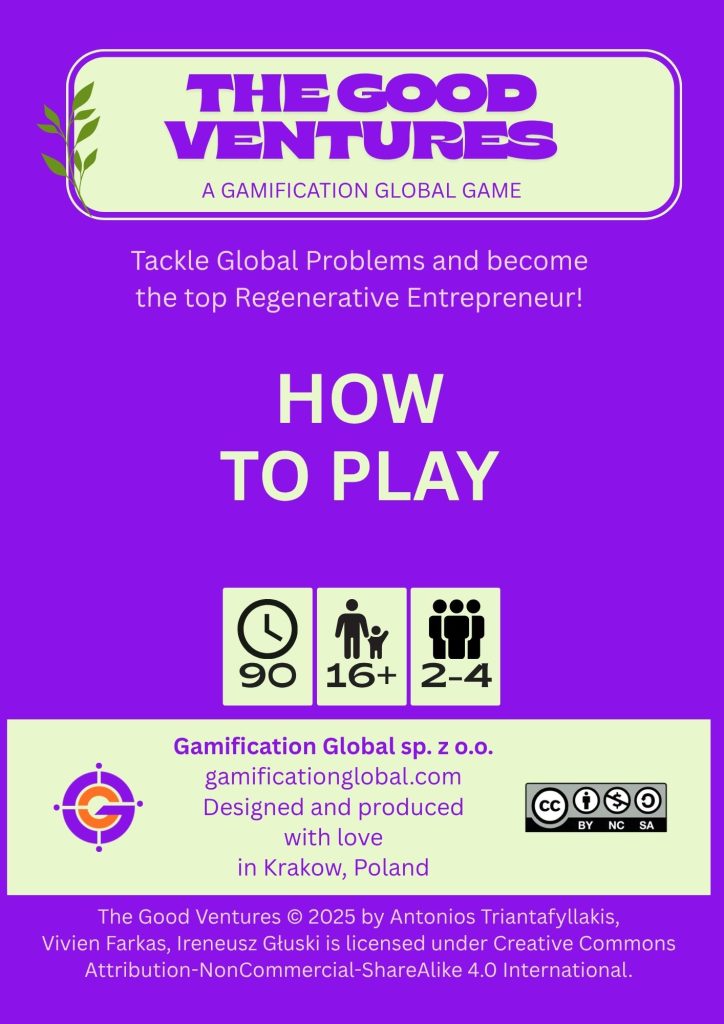
THE GOOD VENTURES

Gamification Global, a social enterprise founded in Poland but working globally, as the name suggests, has developed a card game in which players build companies that put people and the planet first. In this innovative business game 3-4 players craft visionary companies that serve real audiences while tackling global problems, by assembling cards from various decks.
About half of GreenComp is tackled while playing this game, and even though the game has a commercial character and the company behind it aims to develop associated workshops and consulting offers, there will always be a free print-and-play version of the game available on the website of the company. A tribute to drawing inspiration from regeneration.

LARP FOR CLIMATE

Our good friends at the Nausika Foundation, a partner organisation of Climate for All, led Larp For Climate, an international initiative to support climate activists and educators with larp (Live Action Role-Play) and larp-based tools for education and social change. The initiative was launched in 2021, with Fridays For Future Poland and support from the Municipality of Kraków. In 2022 – 2024, Larp For Climate was supported financially by the Erasmus+ Program, which allowed them to design new games and facilitate them at various occasions, from school lessons to big cultural festivals. The partners of the Erasmus+ project are Peipsi MTU (Estonia), Alibier (Norway), and Larpifiers (Greece).

This partnership produced five amazing games! Our personal favourite? Climate Perspectives, a diplomatic game about climate change.

K2 GAMES

K2Games—Learning by Playing was an Erasmus+ funded project that ran from 2018 to 2021. A historic first, the project recognised the power of games to develop competences for sustainability and got to work designing! Led by the Society for Responsible Consumption (Romania), in partnership with Insight_epd (Italy), CRISP (Germany), and EEHYC (Lithuania), a team of 25+ members of staff and collaborators produced two board games and five simulation games, along with a guidebook for facilitators.

Our personal favourite? K2 Pioneer City, a cooperative board game that addresses environmental change, pollution, decision-making, and the sustainability debate.

CLIMATE ACTION SIMULATION

The Climate Action Simulation is a highly interactive, role-playing game for groups to explore the different stakeholders and solutions that need to come together to take action on climate change. It is framed by the En-ROADS simulator, which allows participants to rapidly assess the impacts of different solutions to climate change—like energy supply subsidies, energy efficiency, or land use changes. The game is conducted as a simulated emergency climate summit organized by the United Nations to establish a concrete plan to limit global warming by bringing together government, business, and civil society representatives. It is a fun format for groups to explore climate change solutions and see what it would really take to address this global challenge. The Climate Action Simulation was co-developed by Climate Interactive, the MIT Sloan Sustainability Initiative, and the UMass Lowell Climate Change Initiative..

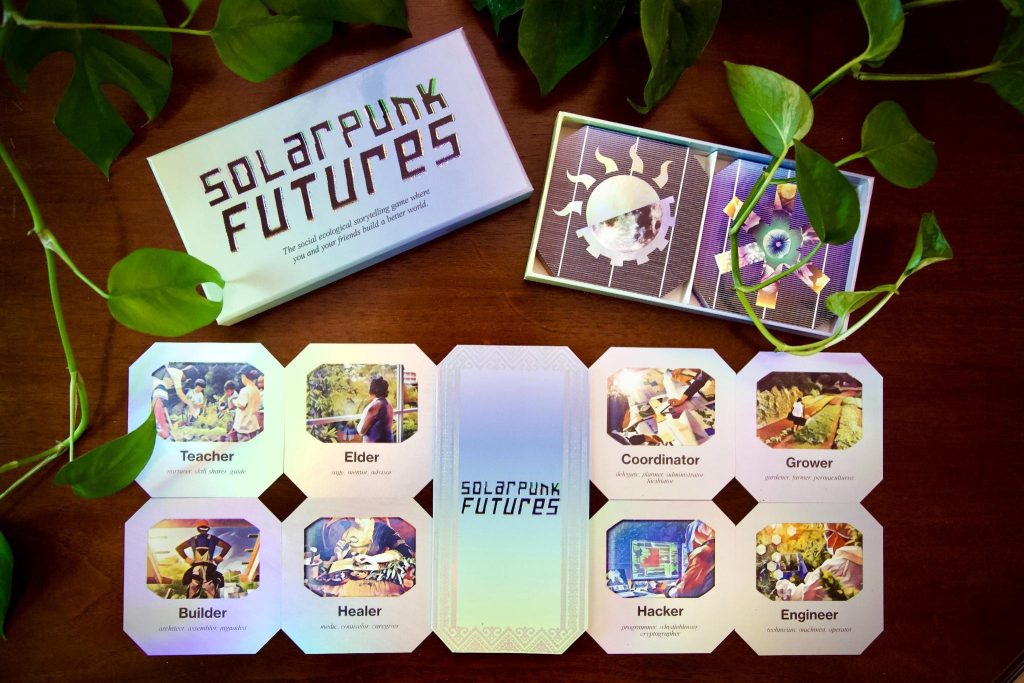
SOLARPUNK FUTURES

Solarpunk Futures is a storytelling game where players imagine the pathways to a desirable world from the perspective of a utopian future. Players use a deck of cards to remember Ancestors and work together using Tools and Values to overcome a set of real-world Challenges. Through dialogue and collaborative worldbuilding, collective and visionary narratives emerge of a new society, along with plausible scenarios for how to get there.

A wonderful and very artistic storytelling game, where you use the game’s deck of cards as prompts for collaborative worldbuilding. It’s a great game for exploratory thinking and collective action, that helps to imagine positive futures. The print-and-play version of the game can be freely downloaded from the website of the project.

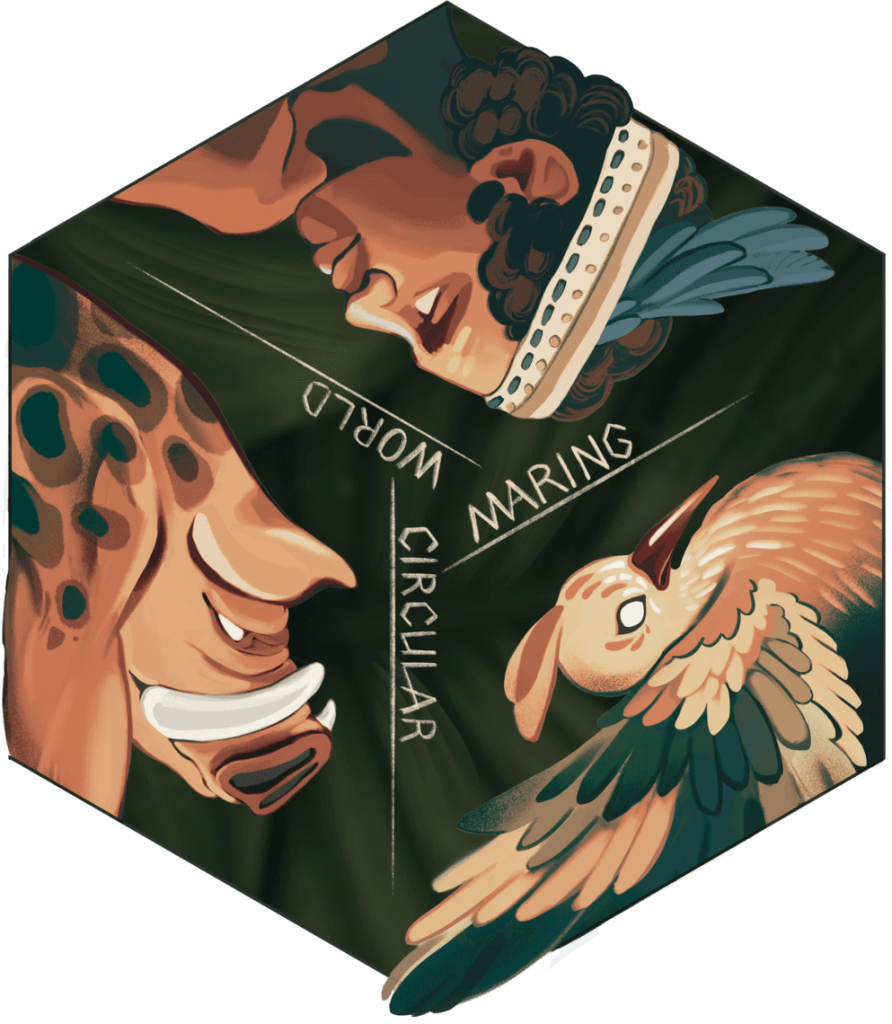
THE CIRCULAR MARING WORLD

Once again, we turn to our friends at Nausika Foundation for one more inspiring project and game!

The Circular Maring World is co-funded by the Erasmus+ programme of the European Union, led by the Nausika Foundation (Poland) in partnership with The Larpifiers (Greece) and Fahrten Ferne Abenteuer (Germany).

An anthropological board game was produced by this partnership, based on academic research by Roy Rappaport (Pigs for the Ancestors, 1968, New Haven: Yale University Press). You play one of the indigenous Maring tribes of Papua Island, struggling to maintain balance in times of globalisation, threatening to throw you off the scale. You will find plenty of anthropological details in the storyline, while on the overall level, the Game tackles modern topics of Degrowth, Circular Economy and Deep Ecology.

COMMERCIAL GAMES

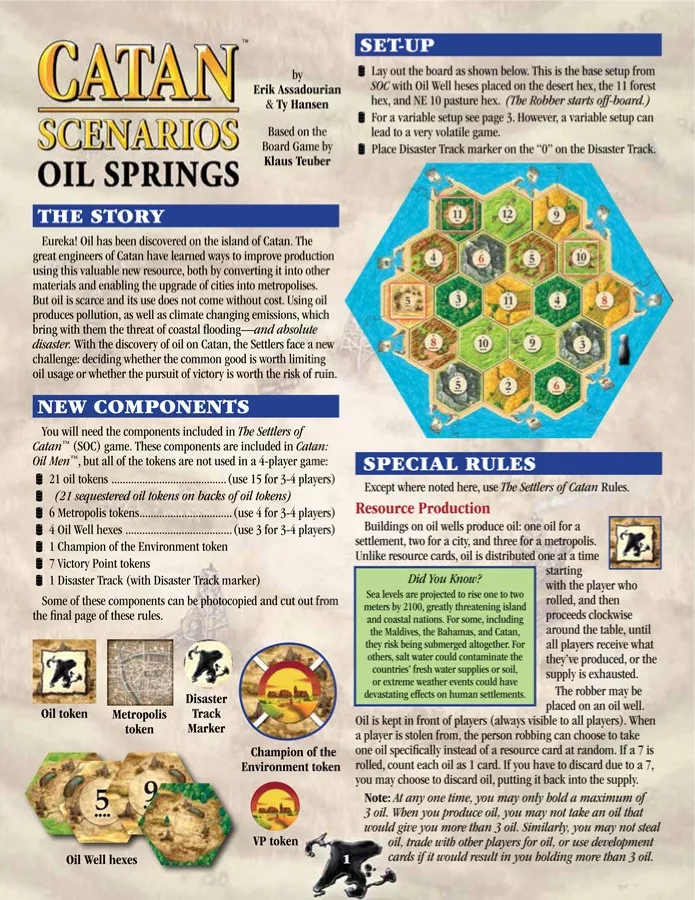
CATAN OIL SPRINGS

Eureka! Oil has been discovered on the island of Catan.

The great engineers of Catan have learned ways to improve production using this valuable new resource, both by converting it into other resources and enabling the upgrade of cities into metropolises. ​​​​​​

Oil Springs is a scenario expansion for CATAN. To play this scenario, you need all game components of the CATAN base game.

Resource management is integral to understanding climate change in practice, and few games are better at tackling resource management in-game than CATAN. The EDUCATOR’S RESOURCES available on the game page also help a lot to understand the underlying links to real-world climate change.

PS. We’d love to also play the standalone CATAN NEW ENERGIES, but we simply haven’t played it yet, and that’s the only reason we can’t recommend it here!

EARTH RISING

A cooperative board game about saving the world!

Earth Rising isn’t about vanquishing evil or undoing some terrible plot… instead, up to six players must work together to bring the world into sustainable harmony. Balancing the needs of people with the limits of our planet’s biosphere, it’ll take strong co-operation and careful planning to reverse the damage done and transform our society into sustainability. A co-operative game for families and friends, aged 10+. You have twenty years to transform the world. Are you up to the task?

The game design is based on the ‘doughnut economics’ system, devised by Oxford Economics Professor, Kate Raworth, and demonstrates how our societal needs may be balanced alongside our planetary impact. We love the engine-building mechanics of Earth Rising, perfect for developing systems thinking skills. It also has a really beautiful board design!

CORPORATE GAMES

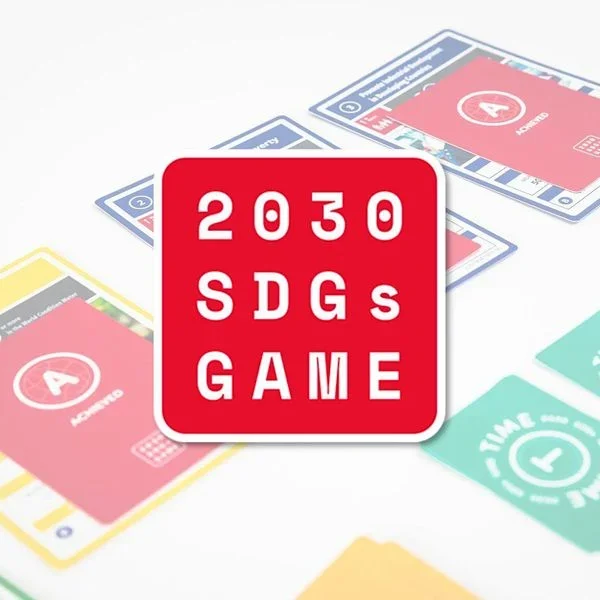
THE 2030 SDGS GAME

An invitation to explore the world and yourself

The 2030 SDGs Game is a multiplayer, in-person, card-based game that simulates taking the “real world” into the year 2030. Designed in Japan in 2016, this experience has become a powerful and impactful social phenomenon, earning extensive media coverage and reaching over 400,000 participants.

Due to its nature, this game is not available for purchase, but only through events hosted by certified facilitators around the world.

One of the only two corporate games we recommend, this one is magnificent in its capacity for a mindset shift and brilliant in its implementation of systems thinking. The game has its own debriefing method, so using it with our workshop format would require adaptation, for example, by implementing our alignment with GreenComp and the Brainstorm and Act phases after the “kizuki” phase of the game’s own debriefing.

EVIVVE

Develop Leaders Who Think Faster, Collaborate Better, and Perform Under Pressure

Evivve is a cutting-edge multiplayer simulation designed to surface authentic leadership behaviours in real time. Underpinned by neuroscience, it transforms how organizations build adaptive, high-performing teams.

Due to its nature, this game is not available for purchase. It is offered to businesses by certified facilitators around the world as part of their professional services.

The second corporate game we recommend, Evivve is competence-based in its own merit. It is directly relevant to the green competences of individual vs collective action. This game also has its own debriefing method, so using it with our workshop format would require adaptation. You can do that by implementing our alignment with GreenComp and the Brainstorm and Act phases after the game’s own debriefing on concrete learning points and behaviours.

Looking for more games to play?

Why not have a look at our research? We researched 115 games related to sustainability! We aligned them to GreenComp, the European framework on competences for sustainability, and created a searchable database for your pleasure. Go have a look!

How we crafted our original games

How we crafted our original games

The heart of the Climate for All project beats in the games we’ve created together. Designing educational games for sustainability is no small task — it takes creativity, collaboration, and care. That’s why our partners came together across three dynamic phases to bring these games to life:

  1. Prototyping in Kraków: We started with bold ideas and early designs, building the first playable prototypes through hands-on collaboration.
  2. Remote Development: From prototypes to polished beta versions, our teams refined mechanics, integrated feedback, and ensured every game supported sustainability competences and accessibility.
  3. Finalisation in Germany: In Bad Belzig and Berlin, we completed, tested, and perfected the games — ready for facilitators, educators, and communities to start playing for change.

This journey combined play, research, and purpose — all to create tools that make learning about sustainability engaging, meaningful, and inclusive.

1. Designing the First Game Prototypes in Kraków

In February 2024, the Climate for All partners gathered in Kraków, Poland for a week-long creative sprint to design the very first prototypes of our educational games for sustainability.

We formed cross-partner teams combining skills in game design, facilitation, climate activism, and education. Together, we turned initial ideas—shaped during our research phase—into six playable prototypes, each designed to build sustainability competences based on the GreenComp framework.

The week was packed with creativity, expert insights, and collaborative playtesting. We explored how to make games inclusive, accessible, engaging, and easy to facilitate, ensuring that anyone can use them to foster climate action and education.

By the end of the seminar, we had prototypes of:

  • A role-playing election campaign game
  • Cooperative board games imagining sustainable futures
  • A debate game on climate dilemmas
  • Card games on greenwashing and environmental storytelling
  • And more!

These first versions were just the beginning—after Kraków, we continued working remotely to improve them before gathering again to finalise and publish the games.

Check out the photo gallery from our Kraków seminar

2. From Prototypes to Beta Versions

After the creative energy of our Kraków seminar, the Climate for All teams continued their journey remotely to develop our educational games for sustainability. Over the spring of 2024, partners worked together across borders to refine the first prototypes into fully playable beta versions.

This remote phase was all about improving:

  • Game mechanics and clarity of rules
  • Connections to GreenComp sustainability competences
  • Accessibility features to make sure the games are inclusive for all

We tested our games with players, shared feedback between teams, and prepared both print-and-play versions and premium prototypes for the next in-person seminar.

Thanks to this collaborative effort, all six games are now polished, engaging, and ready for final touches—bringing us one step closer to launching educational tools that help communities play their way to climate action.

3. Finalising Our Games in Bad Belzig & Berlin

In June 2024, the Climate for All partners gathered in Bad Belzig and Berlin, Germany, to put the finishing touches on the six original educational games we’ve been developing together.

Over an intensive week, we:

  • Playtested all games extensively to ensure they’re fun, educational, and easy to facilitate.
  • Reviewed accessibility features to make sure everyone can play.
  • Standardised the look, instructions, and materials for both print-and-play and premium versions.

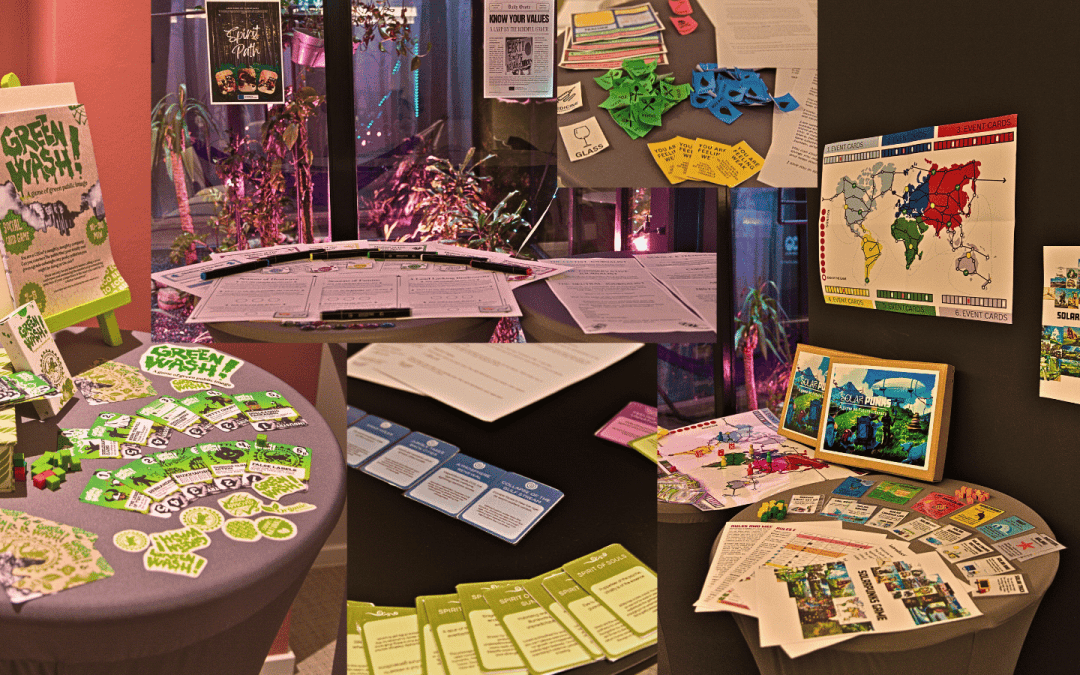
We wrapped up the week with a public Games Fair in Berlin, where we showcased the games for the first time to external audiences, gaining valuable feedback and building excitement for what’s coming next.

All six games are now finalised, freely available, and ready to empower educators, facilitators, and communities to build sustainability competences through play.

Check out the photo gallery from our finalisation seminar:

Epilogue

With six unique and fully developed games, the Climate for All project now offers practical, open-access tools for building sustainability competences through play. But this is just the beginning.

We’re now training facilitators, hosting workshops, and sharing these games across Europe and beyond. Whether you’re an educator, activist, or simply passionate about the future of our planet, these games are for you.

Explore the games, join our community, and start playing your part for climate action!

SOLARPUNKs

SOLARPUNKs

  • Game type: Board game
  • Number of players: 3-5 (optimally 4)
  • Age of players: 12+
  • Duration: 70-120 minutes
  • Suitable for: school lesson, university class, tourist experience, youth exchange, game convention, culture festival, playing at home
  • Game complexity: ⚫⚫⚫⚫⚫⚪(5/6)
  • Preparation effort: ⬛⬛⬛⬛⬜⬜(4/6)
  • Green Competences you’ll develop by playing:
    Futures literacy, Adaptability, Collective action
  • Accessibility: This game is designed so people with colour blindness and tactile dysfunction can also play it
  • Tags: #cooperative, #solarpunk, #movement, #climatesolutions
A cooperative game where players play against the game, coming up with creative solutions against climate change, inspired by indigenous cultures and the solarpunk movement.

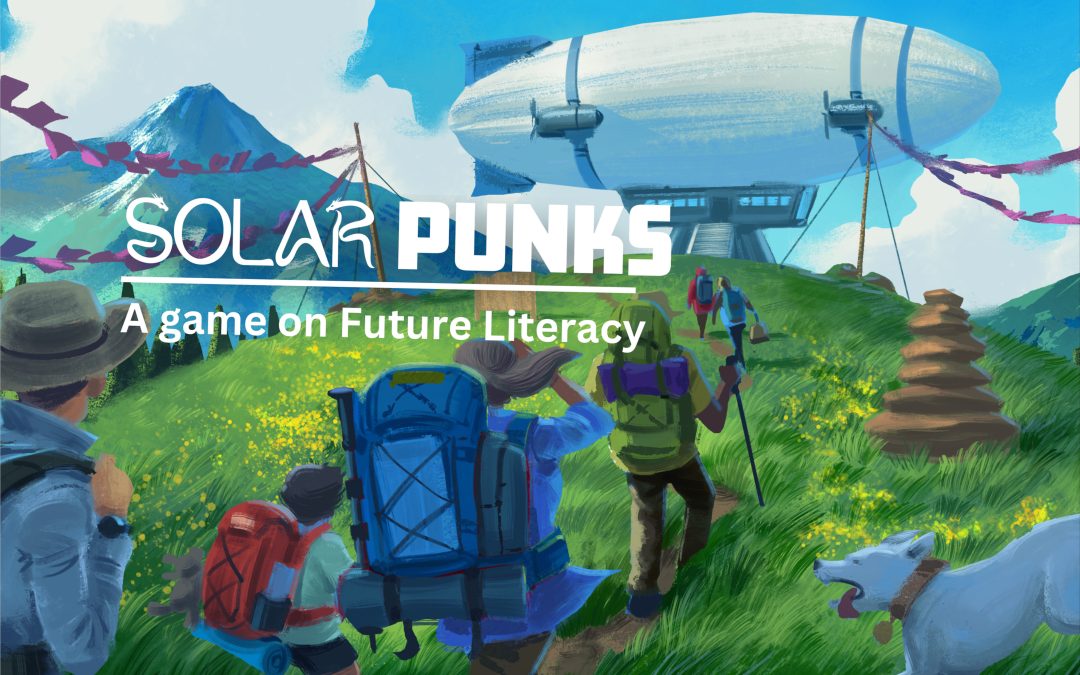
Solarpunks is a cooperative game that enables players to dream and build the Solarpunk Future we all deserve to live in.

You will play as a solarpunk nomad, a change-maker who travels on special ecological camper vehicles with unique abilities. You will travel alone or with other nomads, moving through all the regions and biomes of the planet, working to save continents from climate catastrophes by installing climate solutions and building ecovillages and solar cities.

Choose your character, choose your vehicle, and get ready to build the positive future we all dream of!

Download and print the files below, prepare according to the instructions and you should be ready to play! Make sure to read the game manual carefully in advance, so you can focus on enjoying the game when it’s time to play.

Game design by Marco Gerletti and Valentina Manzhieva
Research by Marco Gerletti
Graphic design by Valentina Manzhieva
Editing by Anja Lotte Kastelic and Antonios Triantafyllakis
Game box illustration by Karl Schulschenk
Special thanks to Luka Predovnik, Amulet D20 & Zavod EREA.

SOLARPUNKs by Marco Gerletti and Valentina Manzhieva is licensed under CC BY-NC-SA 4.0